Gyeongbuk Bonghwa County is showing new possibilities in responding to population decline through settlement-based policies centered on rental housing supply and youth inflow. Attention is being drawn to how policy design aimed not merely at population inflow but at ‘settlement’ and ‘circulation’ is actually working on the ground.
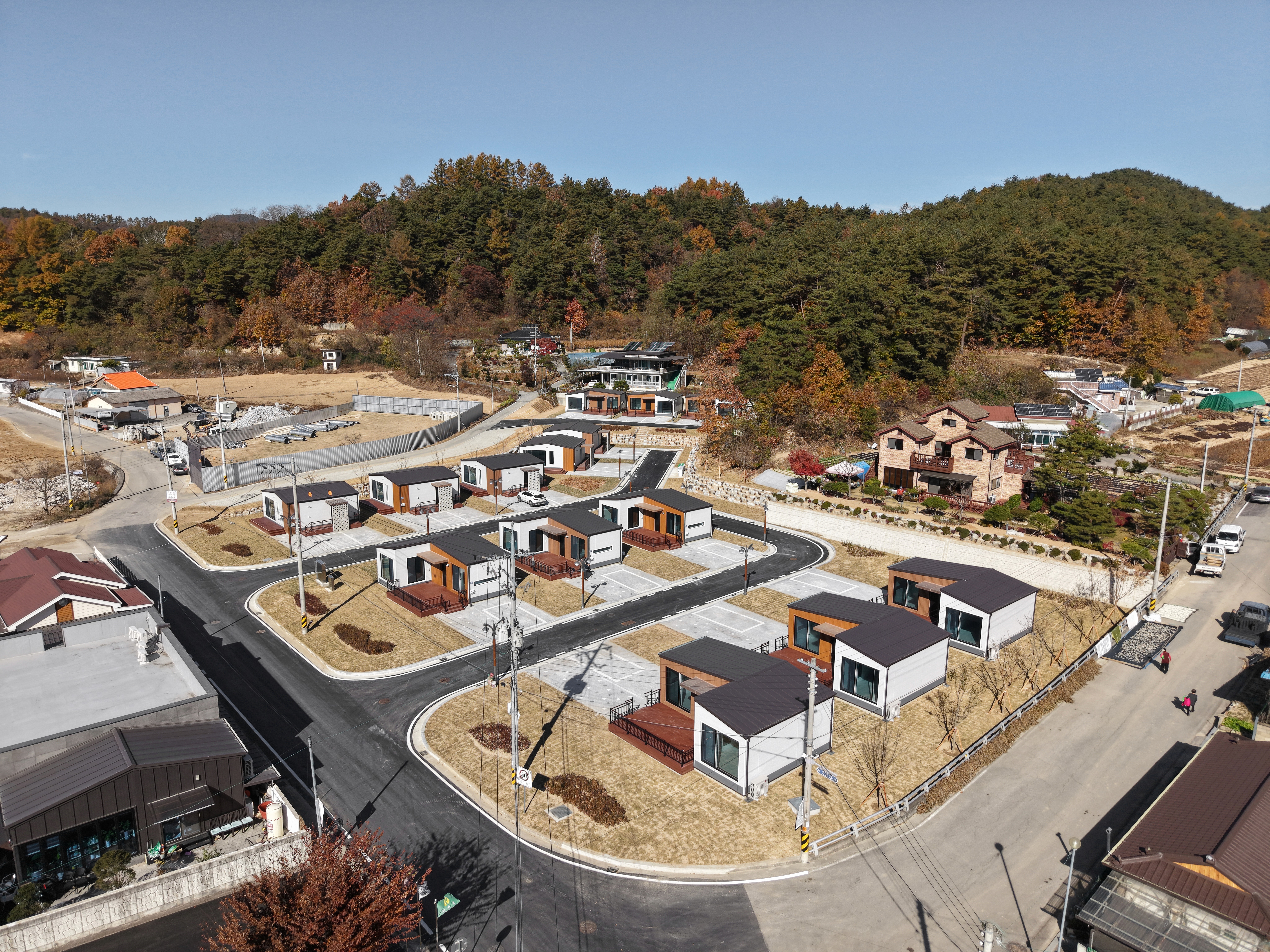
In this interview, Kwon Jin-gi, head of the Future Strategy Division of Bonghwa County, said, “Housing support centered on affordable public rental housing is serving as a key driver of initial inflow,” and added, “It is important to build a structure that connects this to jobs, the local community, and living infrastructure so that it leads to long-term settlement.” In fact, Bonghwa County has drawn in 55 people through the supply of 51 rental homes, and a significant portion of them are young people, enhancing the strategic effect of the policy.
However, since the project is still in its early stage, no clear cases of departure or structural limitations have yet emerged in earnest. Instead, efforts to build relationships through meetings between local residents and tenants, community programs, and other activities are continuing, creating a positive atmosphere for settlement. Bonghwa County plans to build a population circulation structure that links inflow, settlement, and re-migration by connecting jobs based on smart farms, asset-building support, and international exchange projects. The interview was conducted in writing.
Q. How do you evaluate the achievement of supplying 51 rental homes and bringing in 55 residents?
Based on the general size of a 2- to 3-person household, the actual population inflow may be assessed as somewhat lower than the housing supply.
However, most of the 55 people who moved in are strategic target groups such as young people, and considering the trend of youth outmigration from rural areas and the shortage of private housing supply, it is meaningful in that it has secured long-term settlement potential beyond simple quantitative results.
Q. What was the key factor that turned people commuting from other regions into actual ‘settlers’?
To convert commuting residents into settled residents, housing, living infrastructure, local community, and jobs must work together, but among these, affordable housing provision serves as the most basic and core incentive.
In particular, reducing the burden of housing costs, combined with lower transportation costs, improves the overall cost-of-living structure, which leads to a better quality of life and directly affects the formation of settlement intent.
However, I believe housing functions as the starting point of settlement transition, and that continued settlement afterward must be linked with jobs, participation in the local community, and living infrastructure.
Q. What was behind the 5-to-1 competition ratio, and what are the characteristics of the main demand group?
Rural areas have long lacked quality housing supply, and in particular, there have been almost no newly built public housing units, so the housing options available to young people were limited.
In this situation, public rental housing supplied by local governments based on low deposits and rent served as an effective housing alternative by providing both price competitiveness and trust in safety.
In particular, the main demand groups—young single-person households, households returning to farming or the countryside, and households participating in Bonghwa living-experience programs—tend to be highly sensitive to housing costs. Accordingly, their preference for affordable public rental housing was high, leading to settlement inflow.
Q. Does Bonghwa County’s settlement-based policy place more focus on ‘inflow’ or on ‘maintaining settlement’?
In the short term, it is inducing external populations through inflow-oriented policies such as incentives for moving in, and in the mid- to long term, it is promoting the settlement and continued residence of the living population by building a settlement base.
Q. How would you assess the actual residents’ satisfaction and their willingness to continue settling?
With heating and cooling air conditioners, TVs, washing machines, electric ranges, and decks that expand the indoor space of the rental homes so residents can rest and play outdoors, satisfaction is very high. However, willingness to continue settling is formed not simply by everyday satisfaction, but by structural conditions such as a stable connection to local jobs and the continuous maintenance of basic living infrastructure.
In particular, if such a foundation is stably secured, the long-term willingness to settle seems to be maintained regardless of an individual’s subjective satisfaction.
Q. Conversely, were there any difficulties such as departures during the settlement process or conflicts with existing residents?
The settlement-base creation project being implemented by our county guarantees a rental housing residence period of up to four years, thereby easing anxiety in the early settlement stage. As of now, with only 5 months or 8 months having passed, the project is still in its early phase, and no clear success cases, departures, or structural limitations have yet surfaced.
In particular, efforts are being made for mutual communication, such as holding meetings between existing local residents and incoming residents, and positive movements are appearing to build relationships with the local community, such as plans for a senior citizens’ event using the community facilities within the rental housing complex. These points can be evaluated as meaningful outcomes in terms of creating a settlement base that considers community integration beyond simple housing support.
Q. What policy has been most effective in helping young people settle, and what needs to be improved?
We are encouraging early settlement by providing housing rent support and moving-in congratulatory payments for young people who relocate here, and we are building a livelihood-stability base through profitable models such as smart farms and affordable housing support.
Furthermore, in the growth and post-settlement stages, we are additionally reviewing step-by-step policies such as local startup support, conversion of rental housing into units for sale, and supply of family-type housing to support asset formation and family settlement.
Q. After the ‘time-limited’ period for rental housing and smart farms, how is independent settlement continuing?
In the short term, we are expanding the living population through ‘inflow-oriented’ policies such as moving-in congratulatory payments and youth housing cost support, and in the mid- to long term, we are promoting ‘settlement-base creation’ policies such as the development of rental housing complexes and smart farm complexes. In addition, to ensure that the living population can transition into a settled population, we are designing a step-by-step transition structure that includes income stabilization, asset formation, and incentives for long-term residence, so that population inflow will not remain a temporary increase but will lead to sustainable settlement.